
Smart Farming HMI
Strict confidential | IoT dashboard | Web HMI | React | Device configuration
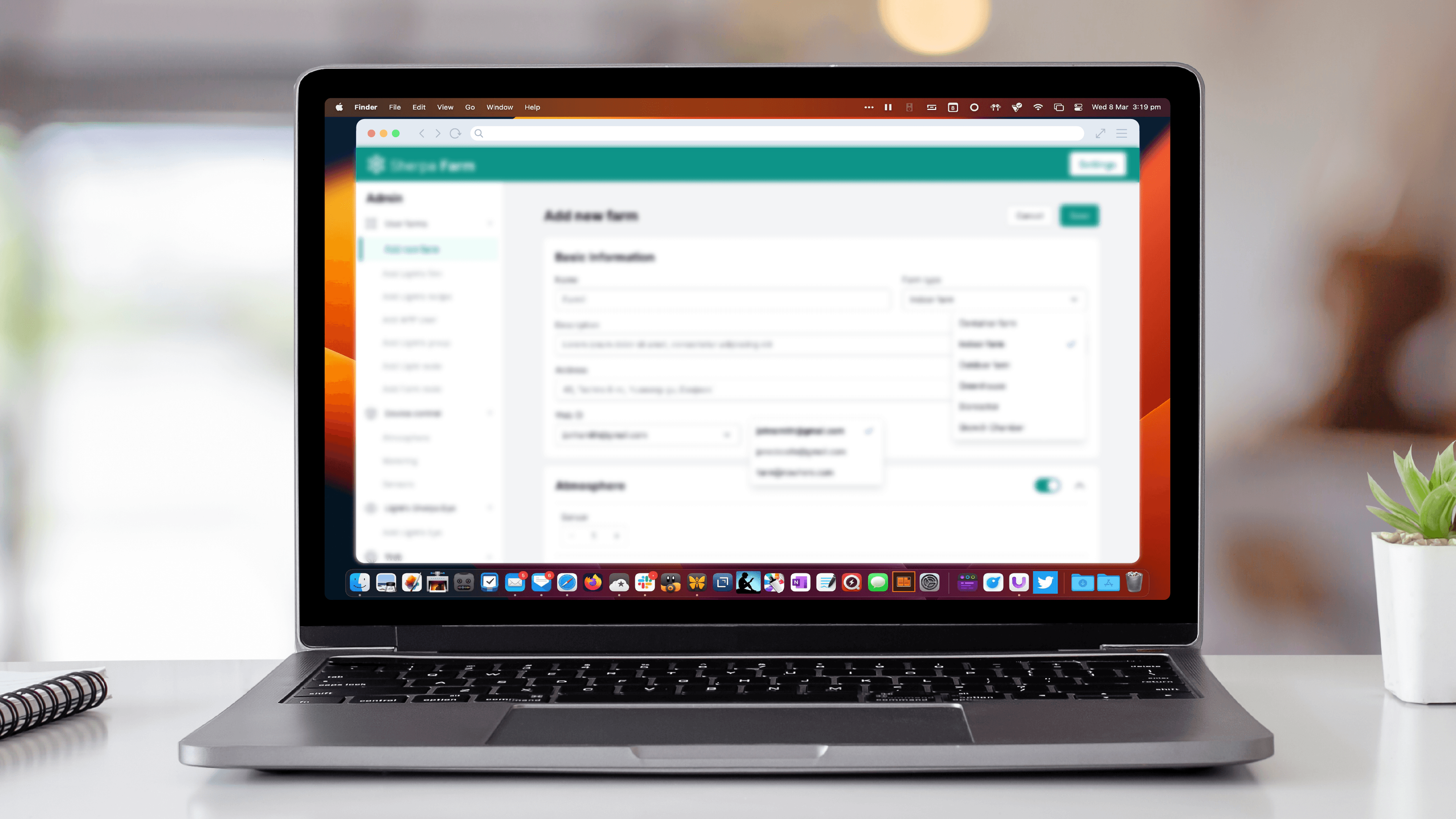
A web-based control layer for configuring and managing connected agricultural systems.
- Role: UX/UI Engineer
- Platform: Web application
- Scope: Interface design, React implementation, API integration, mock server testing, validation, handoff.
- NDA project · Confidential/internal case study
Confidential project snapshot
This page summarizes my role, process, and impact. Visuals are limited due to confidentiality or are being added gradually.
Introduction
I designed and built a web-based HMI for managing smart farming environments. The dashboard allowed administrators and technical users to configure farms, assign devices, manage access, and validate environmental control settings through a centralized interface.
The challenge
The system controlled connected devices with real physical consequences. Incorrect configuration could affect plant health or system safety, so the interface needed to prioritize clear validation, safe defaults, and predictable data flow.
My contribution
- Designed admin workflows for farm setup, device assignment, user permissions, and parameter configuration.
- Implemented the front end in React with predictable state management and reusable UI patterns.
- Built a mock API environment to test flows when live backend access was limited.
- Translated hardware and agricultural constraints into safe input ranges, disabled states, and feedback patterns.
- Maintained consistency with the company's broader mobile ecosystem.
Outcome
The project turned fragmented technical configuration processes into a more maintainable web interface and strengthened my approach to designing around data flow, validation, and operational safety.
Safety through configuration clarity
This work highlights my ability to design interfaces for connected systems where software decisions affect physical environments. The value was not only making configuration possible, but making it safer, more predictable, and easier to validate before changes reached real devices.