
Sherpa NIA
Publicly presented product | Smart agriculture | Mobile UX | React Native | AI-assisted decision support
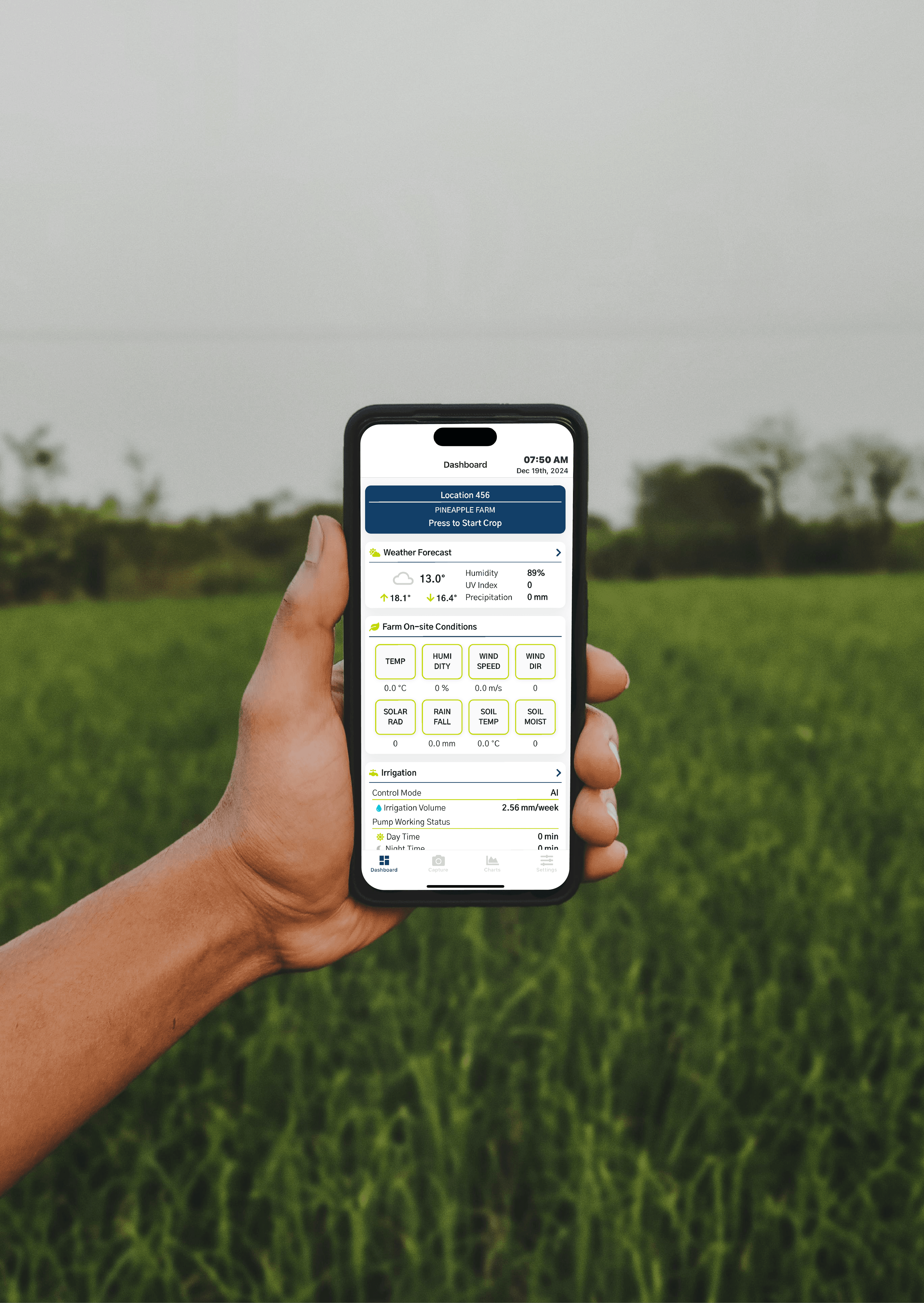
Turning real-time farm data and AI recommendations into guidance farmers can trust.
- Role: UX/UI Designer and Front-End Developer
- Platform: Mobile application
- Scope: Research synthesis, UX/UI design, React Native implementation, API/MQTT integration, data visualization, and localization-ready architecture.
- Publicly Presented Product · Limited Detail
Project snapshot
This page summarizes the project, my role, process, and outcome. Additional visuals and process artifacts will be added over time.
Introduction
Sherpa NIA is a smart agriculture mobile platform that helps farmers monitor field conditions, understand environmental data, and act on AI-assisted guidance. The product connects sensor-based monitoring with practical decision support, including irrigation guidance and disease/pest risk prediction. My work focused on making complex agricultural data easier to understand and act on. Farmers needed more than raw readings or alerts; they needed clear states, practical next steps, and enough context to trust the recommendation.
The challenge
The app had to support real farming conditions, where connectivity, device quality, lighting conditions, and technical familiarity could vary widely. Because the product connected environmental data, AI models, and user action, the interface needed to communicate both urgency and uncertainty clearly. A key design challenge was translating sensor readings, risk indicators, forecasts, and recommendations into a mobile experience that felt useful in the field, not overwhelming.
My contribution
- Analyzed field research materials and farmer workflows to define product requirements.
- Designed mobile flows for farm setup, environmental monitoring, alerts, recommendations, historical data, and offline-aware use.
- Built the front end in React Native and integrated real-time data updates and API-based features.
- Created UI patterns that paired data values with plain-language states, icons, and guidance.
- Collaborated with engineers, agronomy researchers, and AI/data specialists to keep the experience scientifically and technically grounded.
Outcome
The project expanded Sherpa Space’s smart agriculture work from monitoring into decision support. Publicly presented materials describe the platform as supporting real-time farm visibility, irrigation guidance, disease/pest prediction, and more efficient use of agricultural resources. For me, the project strengthened my approach to human-centered AI: design should help users understand what a system detected, why it matters, and what action they can take next, especially when decisions affect real crops, resources, and livelihoods.
Designing for trust in the field
This work reflects how I design for real-world conditions: imperfect connectivity, environmental uncertainty, varied technical familiarity, and decisions that depend on trustworthy data. It also highlights my ability to collaborate across design, engineering, AI, and agricultural science without losing sight of what farmers need to understand and do next.