
Sherpa Farm
Commercial product | Smart agriculture | React Native | Data visualization | IoT control
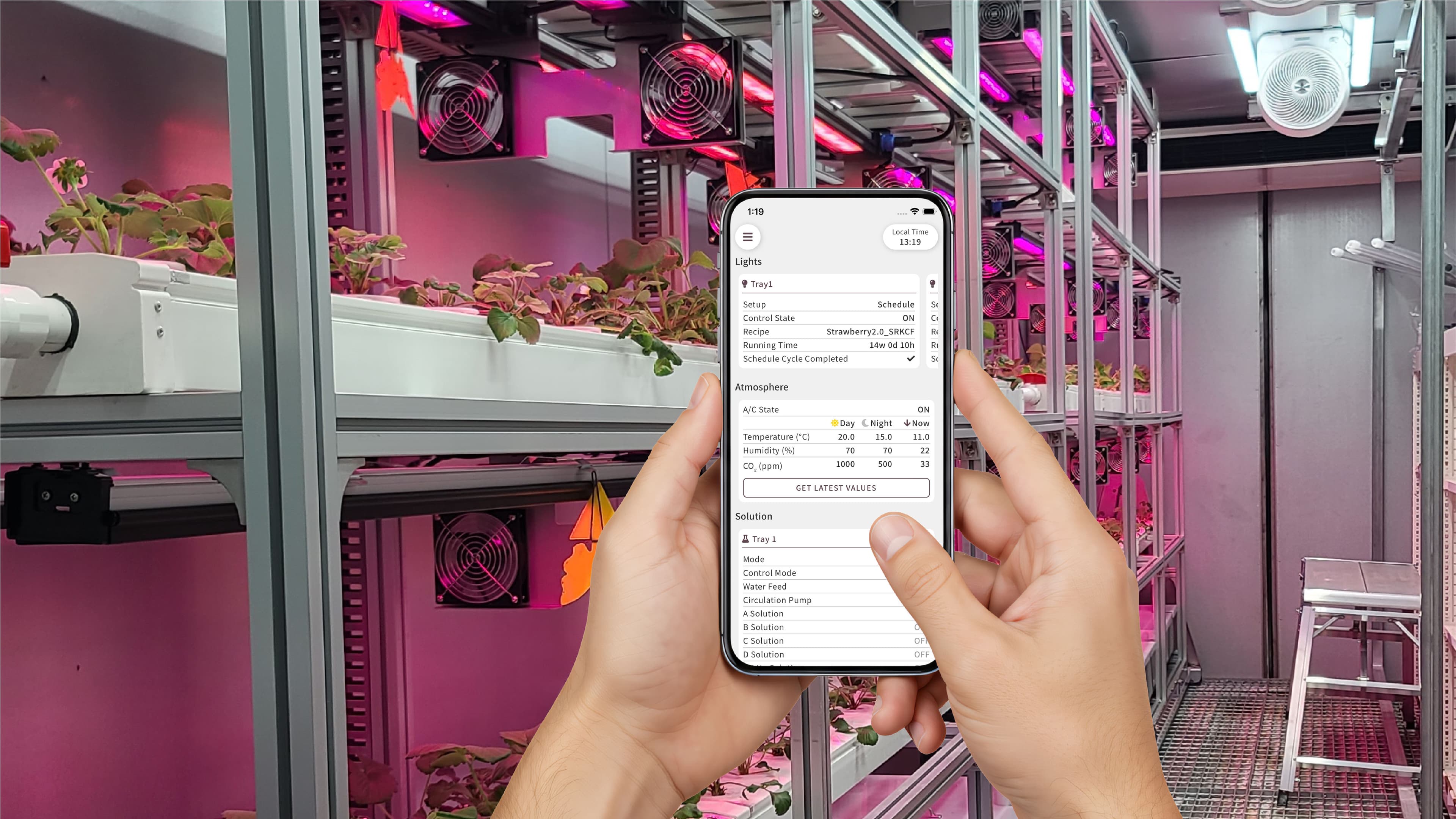
A commercial mobile dashboard for monitoring and controlling modular indoor farming systems.
- Role: UX/UI Designer and Front-End Developer
- Platform: Mobile application
- Scope: UX/UI design, React Native development, MQTT/API integration, data visualization, performance optimization, and modular control flows.
Project snapshot
This page summarizes the project, my role, process, and outcome. Additional visuals and process artifacts will be added over time.
Introduction
I designed and built Sherpa Farm, a mobile dashboard for operating modular smart farming systems. The app helped users monitor environmental data, control farm modules, inspect historical values, and manage different farm configurations through a consistent mobile interface.
The challenge
Sherpa Farm had to support many variations: different farm types, sensor combinations, control modules, and user-specific configurations. Without a clear design and front-end structure, that level of modularity could easily become difficult to maintain. The challenge was to create enough flexibility for each deployment while keeping the app understandable for users and manageable in code.
My contribution
- Designed modular dashboard and control-card patterns that adapted to different farm configurations.
- Implemented React Native screens for monitoring, control, data history, and export/import support.
- Created reusable UI and implementation patterns for control states, schedules, alerts, and module-specific settings.
- Handled real-time data and visualization constraints, including performance optimizations for mobile charts.
- Balanced interface clarity with technical constraints such as API cost, connectivity, and sensor variability.
Outcome
The app became a practical operational interface for smart farm deployments and helped establish a scalable pattern for later agricultural products. It shaped how I approach modular, data-heavy interfaces today.
Modularity without chaos
Sherpa Farm taught me how important structure becomes when a product needs to support many deployment-specific variations. Each farm could require different modules, controls, data views, and behaviors, but the app still needed to feel consistent to users and remain maintainable for development. My work focused on creating reusable dashboard, control, schedule, and sensor-feedback patterns so the app could flex across smart farming environments without becoming a fragile collection of one-off screens.