
Indoor Cultivator
Partial public case study | IoT | Physical prototyping | Embodied design | System behavior | Shared patent contribution
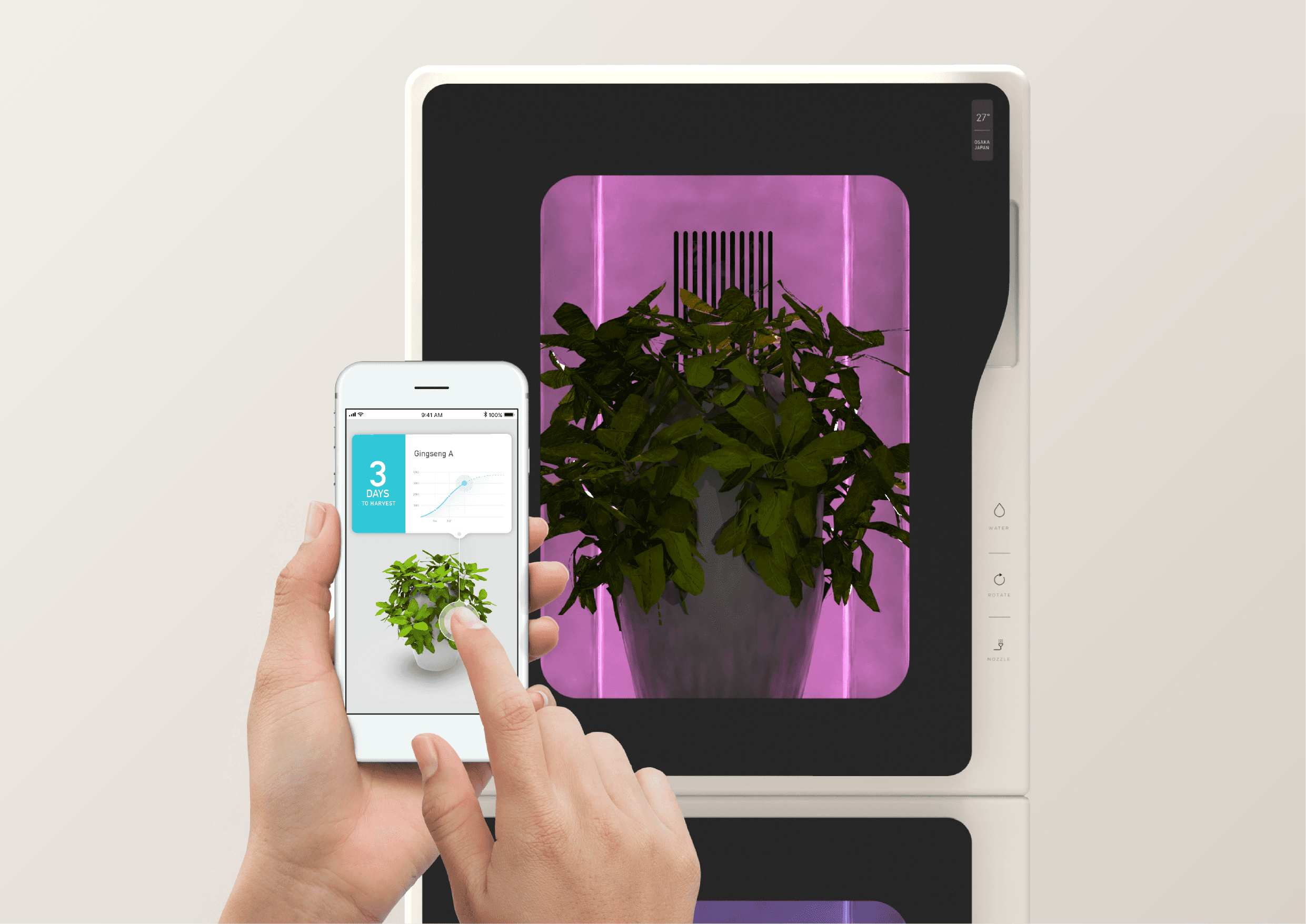
Designing a living system around continuity, interruption, and trust.
- Role: Project leader on the design lab side; researcher, designer, firmware contributor, and facilitator
- Format: Research-driven product exploration with a working prototype
- Scope: Research, workshops, embodied design, concept development, firmware logic, physical prototyping, team coordination, and shared patent contribution for the plant-holding vase component.
Project snapshot
This page summarizes the project, my role, process, and outcome. Additional visuals and process artifacts will be added over time.
Introduction
I led the design-lab side of an indoor cultivator research prototype exploring how people might grow plants at home through a more reliable, approachable, and behaviorally supportive system. The project combined user research, embodied design, physical prototyping, firmware behavior, and system-level interaction design. In addition to the digital and behavioral system work, I also contributed to the physical product design, including a shared patent for the vase component that holds the plants.
The challenge
Unlike a typical interface project, this was a living system. Plant growth changes over time, maintenance can be interrupted, and hardware must tolerate uncertainty. The design needed to support everyday routines while protecting the biological system inside. The physical structure also mattered: the way plants were held, accessed, rotated, watered, and maintained directly shaped the user experience. This made the project a combination of interaction design, product design, and biological system design.
My contribution
- Led and facilitated research, ideation, embodied design sessions, and stakeholder workshops.
- Guided undergraduate contributors and integrated their work into a coherent system direction.
- Designed state-driven system behavior around planting, checking, harvesting, maintenance, alerts, and recovery.
- Contributed firmware logic for system states, rotation, lighting, sensors, and safe behavior.
- Used physical prototyping and play-acting to test reachability, maintenance rhythm, and interaction flows.
- Contributed to the physical product system, including a shared patent for the plant-holding vase component.
Outcome
The project did not become a commercial product, but it helped validate important assumptions and risks. It showed how design can function as risk discovery, helping teams understand what should be pursued, postponed, or avoided before making larger investments. The shared patent contribution also reflected the project’s cross-disciplinary nature: the design challenge was not only how users would interact with a device, but how the physical structure could support plant growth, maintenance, and trust over time.
Designing for living systems
This work shaped how I think across hardware, software, behavior, biology, and everyday routines. It strengthened my approach to trust, recoverability, and failure modes: designing not only for ideal use, but for interruption, uncertainty, and recovery. It also expanded my understanding of design beyond screens. In this project, the interface, firmware behavior, physical mechanism, and plant-holding structure all had to work together as one system.